Thursday, August 27, 2015

German Idioms to Use and "Go Native"

In these 2 FluentU posts there are a few repetitions. 
What happens when you re-read an idiom?
Do you overlook it, or do you recognize it as a significantly important idiom, and so work to internalize it first of all?

A.  20 Common German Idioms to Sound Like a Native

20 common german idioms sound native

1. um den heißen Brei herumreden   (her-um-reden = to speak around)

Literally: to talk around the hot porridge
English equivalent: to beat around the bush

Da die Wahl bald ist, spricht der Politiker oft um den heißen Brei herum.
(Since the election is soon, the politician beats around the bush often.)

20 common german idioms sound native

2. Da kannst du Gift drauf nehmen

Literally: You can take poison on that
English equivalent: You can bet your life on that

Eines Tages wird er berühmt sein. Da kannst du Gift drauf nehmen.
(One day he will be famous. You can bet your life on that.)

20 common german idioms sound native

3. sich zum Affen machen

Literally: to make an ape (or monkey) of oneself
English equivalent: to make a fool of oneself

Hans wird die Arbeitsstelle nicht bekommen. Während des Interviews hat er sich zum Affen gemacht.
(Hans will not get the job. He made a fool of himself during the interview.)

4. zwei Fliegen mit einer Klappe schlagen

Literally: kill two flies with one swat
English equivalent: to kill two birds with one stone

Da ich zwei Besorgungen im Standzentrum machen muss, kann ich zwei Fliegen mit einer Klappe schlagen!
(Since I must run errands to run in the city center, I can kill two birds with one stone!)

5. eine Extrawurst verlangen

Literally: to ask for an extra sausage
English Equivalent: to ask for special treatment
Da er der Sohn des Chefs ist, verlangt er immer eine Extrawurst.
(Because he is the son of the boss, he always asks for special treatment.)

20 common german idioms sound native

6. Himmel und Hölle in Bewegung setzen

Literally: put heaven and hell in motion
English equivalent: to move heaven and earth
Er wird Himmel und Hölle in Bewegung setzen um zwei Karten für das Konzert zu bekommen.
(He will move heaven and earth to get two tickets to the concert.)

20 common german idioms sound native

7. Da steppt der Bär

Literally: The bear dances there
English Equivalent: It will be a good party
Ich gehe heute Abend zu Maria. Da steppt der Bär!
(I’m going to Maria’s tonight. It will be a good party!)
A close relative to the dancing bear is the burning air. It’s a similar phrase with an identical meaning:
Da brennt die Luft!

20 common german idioms sound native

8. Tomaten auf den Augen haben

Literally: to have tomatoes on one’s eyes
English Equivalent: to be oblivious to what is going around you
Der Freund von Anna betrügt sie aber sie hat Tomaten auf den Augen.
(Anna’s boyfriend is cheating on her but she’s oblivious to what’s going on.)

20 common german idioms sound native

9. den Nagel auf den Kopf treffen

Literally: to hit the nail on the head
English Equivalent: to hit the nail on the head

Du hast recht! Du hast den Nagel auf den Kopf getroffen.
(You are right! You’ve hit the nail on the head.)

20 common german idioms sound native

10. Ich verstehe nur Bahnhof

Literally: I can only understand “train station.”
English equivalent: It’s all Greek to me.

Kannst du seinen Dialekt verstehen? Ich verstehe nur Bahnhof.
(Do you understand his dialect? It’s all Greek to me.)
20 common german idioms sound native

11. weggehen wie warme Semmeln

Literally: to go like warm rolls
English equivalent: to go or sell like hot cakes

Die Kekse, die Stefan gebacken hat, gehen weg wie warme Semmeln.
(The cookies that Stefan baked are going like hot cakes.)

20 common german idioms sound native

12. seinen Senf dazugeben   (dazu-geben = to give to"it")

Literally: to add their mustard
English equivalent: to put their two cents in

Peter spricht zu viel. Er muss immer seinen Senf dazugeben.
(Peter talks too much. He always has to put his two cents in.)

20 common german idioms sound native

13. jdm. die Daumen drücken

Literally: to squeeze your thumbs for someone
English equivalent: to keep one’s fingers crossed for someone

Viel Glück! Ich drücke dir die Daumen!
(Good luck! I’ll keep my fingers crossed for you!)

14. etw. wie seine Westentasche kennen

Literally: to know something like one’s waistcoat pocket                  
English equivalent: to know it like the back of one’s hand.

In Berlin werde ich mich niemals verirren. Ich kenne es wie meine Westentasche.
(I will never get lost in Berlin. I know it like the back of my hand.)

20 common german idioms sound native

15. Man soll den Tag nicht vor dem Abend loben

Literally: Don’t praise the day before the evening.
English equivalent: Don’t count your chicks before they hatch.

Sag nicht, dass Argentinien die Weltmeisterschaft gewinnen wird. Man soll den Tag nicht vor dem Abend loben!
(Don’t say that Argentina will win the World Cup. Don’t count your chicks before they hatch!)

20 common german idioms sound native

16. jdm. ein Ohr abkauen

Literally: to chew someone’s ear off
English equivalent: to talk someone’s ear off

Dieses Kind kann nicht still sein. Es kaut mir ein Ohr ab.
(This child cannot be silent. He is talking my ear off.)

20 common german idioms sound native

17. klar wie Kloßbrühe

Literally: clear as dumpling broth
English equivalent: crystal clear

Verstehst du mich? Ist es klar wie Kloßbrühe?
Do you understand me? Is it crystal clear?

20 common german idioms sound native

18. dumm wie Bohnenstroh

Literally: as dumb as a bean straw
English equivalent: as thick as a brick

Er redet nur Quatsch. Er ist dumm wie Bohnenstroh.
(He talks only nonsense. He is as thick as a brick.)

20 common german idioms sound native

19. die Kirche im Dorf lassen

Literally: to leave the church in the village
English equivalent: to not get carried away

Der Film war nur OK. Bitte lass die Kirche im Dorf.
(The film was only OK. Please don’t get carried away.)
20 common german idioms sound native

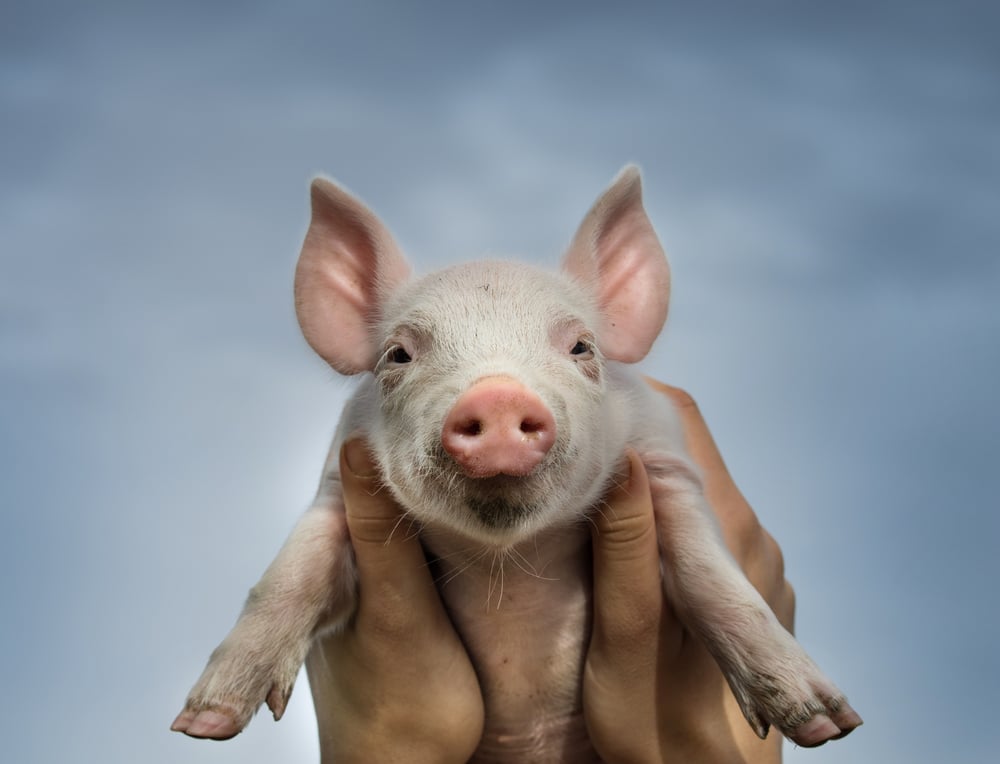
20. Schwein haben

Literally: to have a pig
English equivalent: to have a stroke of luck

Obwohl er nicht für den Test gelernt hat, hat er den Test bestanden. Er hat Schwein gehabt!
(Although he didn’t study, he passed the test. He had a stroke of luck!)


This second group of idiom involve food (mostly), and illustrating them is more difficult.

B.  21 Delicious German Expressions to Give You Food for Thought

In Germany, the pig is pretty popular.
A symbol for various things, to get lucky is to “have pig” (Schwein haben),
but if your German skills are unter den Sau, “under the pig,” they’re not very good at all.
Hopefully, though, you won’t think your pig whistles (Ich glaube mein Schwein pfeift) because in that case you’ve just totally lost your mind.

Now, on to the best of the Wurst.

1. er glaubt er bekommt eine Extrawurst

Literally: He thinks he gets an extra sausage.

Does he think he’s special? Like he gets an extra sausage? We all know someone like this.

2. du armes Würstchen!

Literally: You poor little sausage.

You have a cold! Oh you poor little sausage. Let me make you some soup.
(Careful, as this one is also frequently used condescendingly, which I have to say seems extraordinarily appropriate.)

3. die beleidigte Wurst spielen

Literally: Acting the insulted sausage

Pay no mind to Sally over there. She’s just acting the insulted sausage: pouting, because she didn’t get her way.

4. sich die Wurst vom Brot nehmen lassen

Literally: To let someone take the sausage off your bread.

Stand up for yourself! Don’t let anyone take the sausage off your bread. You’re too good to be taken advantage of like that.

5. das ist mir Wurst

Literally: That is sausage to me.
I don’t care about that at all. Frankly, my dear, I don’t give a sausage.

6. sieht wie eine Presswurst aus

Literally: Looks like a stuffed sausage.
You might want to rethink the size of your clothing. You’re looking a bit like a stuffed sausage in that top. (Oh dear.)

7. es geht um die Wurst

Literally: It goes about the sausage.
Okay now, there are two minutes left in the game! It’s crunch time people! It’s all about the sausage!

8. Alles hat ein Ende, nur die Wurst hat zwei

Literally: Everything has an end, only the sausage has two (ends).

To end this sausage spree on an existential note: everything has an end—except for the sausage—only the sausage has two.


Okay. So sometimes (if you’re extra hungry, I guess) there are a few other food options in Germany besides the majestic Schweinefleisch. Alternative table-talk has predictably, like in English, flavored (haha, see what I did there?) all kinds of idiomatic expressions. Here are more food-related German expressions that aren’t about sausage.

9. um den heißen Brei herumreden

Literally: To talk around the hot soup/porridge.

He simply will not get to the point. He keeps talking around the hot porridge/ hot soup, or, as we say in English, beating around the bush. (“Beating around the bush” is a pretty strange English one, right?)

10. Jemandem Honig um den Mund schmieren

Literally: To smear honey around the mouth.

Before you ask Tim for that favor, make sure you give him lots of compliments—you know, smear honey around his mouth. (English equivalent: “to butter someone up.”)

11. Jemanden ausnehmen wie eine Weihnachtsgans

Literally: To gut someone like a Christmas goose.

If I get another passive aggressive email from Bob I swear I will tear him a new one. I will take him to the cleaners. I will gut him like a Christmas goose. (Whoa!)

12. Dreikäsehoch

Literally: Three-cheeses-high.

Little Clara is celebrating her fourth birthday today. She’s not but a wee little thing, barely three cheeses high! I don’t know what it is, but I just love this one. It literally refers to the height of three wheels of cheese stacked on top of each other.

13. Senf dazugeben

Literally: To add mustard.

Mary always offers her two cents on whatever we’re talking about—whether she’s asked for her opinion or not. She’s always adding her mustard to the conversation.

14. nicht mein Bier

Literally: Not my beer.

Someone’s spreading rumors? Well don’t look in my direction. That’s got nothing to do with me. That sort of thing is not my beer.

15. Tomaten auf den Augen

Literally: Tomatoes on the eyes.

Seriously! Are you blind!? Do you have tomatoes on your eyes!??

16. kleine Brötchen backen

Literally: Baking little rolls.

Our country is taking baby steps toward a brighter tomorrow. We’re baking little rolls.

17. Schokoladeseite zeigen

Literally: To show one’s chocolate side.

We want to present our best work to the client at the next meeting. We’ll show them our good side. Our chocolate side.

18. mit dem ist nicht gut Kirschen essen

Literally: Not good cherry eating.

Yeah…don’t bother inviting Tim tonight. He woke up on the wrong side of the bed this morning. With him is not good cherry eating. We might say in English that he’s not a man you want to mess with.

Now that I’ve got your stomach rumbling and the wheels in your brain turning, allow me wrap up this post with a couple of just plain wonderful German idioms that, I must admit, I use in translation in English from time to time—they’re just that good. (And yes, I sound pretty weird. I’m aware of that.)

19. Jemandem einen Korb geben

Literally: To give someone a basket.

When a boy is courting a girl (or, perhaps more realistically, he just asked her to join him for a Döner after they stumbled out of the techno club at 8 am) but she refuses his advances, she “gives him a basket.” The expression works thusly: “Did you hear what Dan said to Clara last night? Yeah, she wasn’t into it. She gave him a basket.”

Apparently, this wonderful idiom dates all the way back to the 14th century, when a lover hoping to get invited into a royal maiden’s chambers would literally have to be pulled up into her tower secretly in a basket. Should the noble maiden not really want the visitor to arrive, she might send down a very thin basket, or even a bottomless one—thus rendering the journey impossible. (This was before the age of simply not returning someone’s texts.)

Before properly researching this phrase I asked a German friend of mine what she thought it might mean. She replied, “ I dunno, maybe it’s like, ‘Yeah… I’d rather not, thanks, but…um…here’s a nice basket as a consolation prize?’ Everyone needs baskets.” I think I like that better.

20. du kannst mich mal!

Literally: You can me once!!

Okay, so technically this is more of an “elision” than an idiomatic expression. However, I enjoy the completely nonsensical English translation so much (You can me once!!) that I felt compelled to include it on this list. “You can me once” implies a few things—leaves a few words to the imagination—which I am not completely comfortable repeating here…but just imagine what you can do to someone who is most certainly upset with you. I’ll give you a hint: This is very similar to the English expression, “you can kiss my…” you get the point.

21. das Leben ist kein Ponyhof

Literally: Life is not a pony farm.

Ain’t that the truth! Life, my friends, is quite simply not a pony farm.

And, well, there you have it! Twenty-one German idioms for all sorts of situations to make you sound like a pro (if a slightly food-obsessed one).

Now go find a German language partner and practice! And while you’re at it, try explaining to them a few of the thousands of English idioms we take for granted every day. I suggest beginning with “to let the cat out of the bag,” “to be in a pickle” and “everything but the kitchen sink.”

Tuesday, August 25, 2015

Babbel: 3 Myths About Learning Foreign Langauges

Hint:  Don't expect to understand English at first . . .


Myth #1.  Fluency is purely Linguistic and Grammatical (not cultural; not gestures...)

Myth #2.  Fluency is required before you can begin to speak

Myth #3.  Language learning is a linear process

Babbel and Naming Animals in German

Wie heißt das Tier?


Surprises?


How healthy is Germany's Kitchen?

Host Nelson Müller  does the research, with the help of plenty of friends, family members, and experts, using top entries from Germany, Asia, Italy, and Turkey in these 5 categories:

1.  Calories and health
2.  Preparation Speed
3.  Ecological balance, or footprint 
4.  Costs
5.  Taste

Deutsches Essen:  Top oder Flop?


Were you surprised by any of the results?

Let us know, too, if you were surprised about how much of this program you understood!


Tour of Hamburg (Burt Wolf) Text

BURT WOLF: Hamburg, with a population of just under two million, is the second-largest city in Germany, right behind Berlin.

In the year 831, Ludwig the Pious, son of Charlemagne, realized that a little village called Hamburg, at the meeting point of three important rivers, could become a source of great wealth. Not that he was short of cash or anything like that, but even then, the rich liked getting richer.

Its seaport is the largest in the nation and has dominated northern European trade for over four hundred years.

It's a media center and publishes half the newspapers and magazines in the country.

It claims to have more millionaires per capita than any other city in Europe.

And, it is the home of the fountain pen---which makes it easier for the millionaires to sign their checks.

I got to know the city with Ulrike Schroder one of Hamburg’s top tour guides.

ULRIKE SCHRODER ON CAMERA: We have a lake here in the city. This lake is called Alster and there are two parts. We’re going to go to the outer Alster Lake, which is the larger part of the lake. We have a saying here in Hamburg. We say if you fall in the lake and drown, you’re too lazy to get up. It’s only one and a half meters deep, two and a half sometimes. And so it’s a paradise for free time. You can do sailing here, anything.

BURT WOLF ON CAMERA: Those are the houses of the Rich?

ULRIKE SCHRODER ON CAMERA: Those are the houses of the rich. This is the most beautiful residential area here.

BURT WOLF: This is the warehouse district. I understand it was built in the late 1800s and it was where the goods that came off the boats were stored.

ULRIKE SCHRODER ON CAMERA: Hamburg has more bridges than any other city in Europe. The people of Venice don’t want to hear that. The people of Amsterdam don’t want to hear that. Their cities are quite small and they only have a few hundred. And we have more than 2,000 because we have so much water here.

BURT WOLF ON CAMERA:What's that?

ULRIKE SCHRODER ON CAMERA:The building in front of us?

BURT WOLF ON CAMERA: The tall tower.

ULRIKE SCHRODER ON CAMERA: Yes that's our television tower as we call it and it's the tallest building in Hamburg and it has a revolving restaurant and a view platform. You can also do some bungy jumping from the television tower.

BURT WOLF ON CAMERA:Not me!

ULRIKE SCHRODER ON CAMERA: Not you. You know there's a building straight ahead of us and I think it's a pretty building but if you knew what's inside you wouldn't like it -- this is our main tax office.

BURT WOLF ON CAMERA: Taxes. Let's make a quick turn.

ULRIKE SCHRODER ON CAMERA: No, let's just go by it. Today they're not open I hope. And anyway you know in this building there are no stairs…you know why the people there crawl up the walls.

BURT WOLF ON CAMERA:(laughs)

ULRIKE SCHRODER ON CAMERA: This is our underground and our underground is partly an above ground.  The reason behind is we have a very muddy ground here, it's very soft, it's not like New York. New York is built on solid rock so that's also one of the reasons why we can’t have so many skyscrapers here, because the ground is not made for it.  That's why, at the beginning of the 20th Century when we had our first underground, they built it upstairs like on stilts, and I like it particularly because it goes towards the port and from there you have the most wonderful view.

BURT WOLF: In the 1100s Hamburg became a member of the Hanseatic League which was a big deal. The league was made up of about 200 cities that joined together and became exclusive trading partners. If you were going to do business in Northern Europe you had to deal with the Hanseatic League.

BURT WOLF ON CAMERA: By the middle of the 1300s, the league was so powerful that it attacked Denmark because the King of Denmark was not following the league's rules. It won the war and installed its own king. But by the end of the 1600s the development of powerful nations like Russia and Sweden and England put an end to the League. But Hamburg continued to grow and ended up as the third-largest seaport in the world after New York and London.

BURT WOLF: Dr. Juergen Sorgenfrei is in charge of port information.

DR. JUERGEN SORGENFREI ON CAMERA:We are now entering the container area of the port of Hamburg. You see ships are coming from all over the world. This one is CSC Shanghai. It is one of the biggest container vessels today, handling more than 8,000 containers. This is the cargo operation which is typical for Hamburg. You see this is a spreader as we call it. This is a typical 20 feet box. And now he’s setting on, switching the locks, and up (goes the container). It only takes 40 - 70 seconds to unload one box. The complete operation, and this means between 50 to 70 - 80 of these boxes, we can load and unload in one hour.

After, what we call in Germany, the Reunification between Eastern and Western Germany, we find ourselves once again in the center of the world's market. And since that day the Berlin Wall collapsed from within (November 9, 1989) and since unification itself (October 3, 1990), we are in a boom phase. Europe's interior countries like Poland, like Czech Republic, and even Russia today are all served by Hamburg.  The ocean's biggest vessels can come to Hamburg, but they can not go to St. Petersburg, or Rega, or the Baltic Sea area for example.

BURT WOLF: At the edge of the port is the Fish Market. Hamburg merchants have been in the fish business for hundreds of years and this market is still a primary source of supply.

The market is an active site for the sale of fish but the stalls around the fish merchants sell hundreds of other things.  At some stalls the goods are sold through an unusual auction. The auctioneer holds up a box and yells out a price. The person who buys the box gets everything in it. If no one buys the box the auctioneer keeps putting more stuff into the box until it sells.

The Fish Market also has an enclosed hall that is famous for its Sunday morning party.  Here's Maike Grimpe, the hall’s manager.

MAIKE GRIMPE ON CAMERA: People are just celebrating after a night already been out, or just to come over here in the morning.

BURT WOLF ON CAMERA:So it’s a celebration after the celebration.

MAIKE GRIMPE ON CAMERA: Exactly.

BURT WOLF ON CAMERA: What time does it start?

MAIKE GRIMPE ON CAMERA: It starts in the morning, at five a.m. and it goes up to noon to twelve.

BURT WOLF: Live bands, music, food.

MAIKE GRIMPE: Exactly. Everything you need in the morning on a Sunday. Upstairs we have three galleries where we serve breakfast. You pay one price and you have a buffet and you can use that from like six in the morning to twelve, until you’re not hungry anymore. And then just relax, or have a beer and champagne.

BURT WOLF: And an aspirin.

MAIKE GRIMPE: And an aspirin.

FILM SHOWS VIEW OF ST. MICHAEL’S CHURCH

BURT WOLF: Around the start of the 17th century a plague ravaged the city of Hamburg. The death toll was so great that a new burial ground had to be set up outside the city walls. St. Michael’s Church was built to accommodate the mourners.  Here is Dean Alexander Röder, St. Michael's head pastor.

DEAN ALEXANDER RÖDER ON CAMERA: What we have downstairs, in the crypt actually, is the largest Baroque-style crypt in Northern Europe. It’s a basement with more than 400 graveyards, from the 18th and early 19th century. And it is a piece of history of the democratic building of this city because you have mayors, you have people in mass graves who were members of burial societies as they were called. They paid in during their lives and then they were buried in the church.
So people could go down into the crypt, mourn their deceased ones, and still be united with them when celebrating mass up here.

This church is so important because it’s, a landmark of Hamburg, so to say. The spire of this church was the last thing the people who went out on the oceans could see and it was the first thing to see when they came back. And that’s why it became so prominent in the city and so prominent with all the people, even people who do not belong to the church.

When this church burned down in 1906 it was completely destroyed but the tiniest of little pieces were transported out at that time. Everything was destroyed and of course a discussion began among architects, how are we to rebuild this church? Well they decided we want this St. Michael’s back the way we had it. But they changed a few things. Where the centerpiece of the altar painting depicting the Resurrection of Christ they put in a little mosaic now depicting some mixture of style between art nouveau and art deco.

One old part of the church that was saved is the baptismal fount. It’s beautifully done out of marble and 3 little angels carry this marble shell in which the water is carried. Two of them work very hard. The other angel is less visible and therefore might be interpreted to be just standing off to the side and pretending to work, as if to say, "why should I work, if nobody can see me?  It is a wonderful, tiny, humorous piece of art here in the church.

This is probably one of the most vivid churches we have in Germany. We have a wonderful 12:00 noontime short organ service everyday of the year, where all three organs of this church are played from the smallest to the largest, and we still have the largest organ in Hamburg with more than 6,666 pipes. We have still five services every Sunday and also many additional concerts.

IMMORTAL IMAGES

BURT WOLF: The written word has always had an amazing impact. Messages that would have been totally disregarded if they had come by word of mouth were taken as the gospel truth because they were written.

One of the great breakthroughs in western writing came when the ancient Greeks developed the alphabet. The alphabet made it much easier for people to learn to read and write. And as those skills became more wide spread it changed everything in western society.

Another advance, not on the scale of inventing the alphabet, but never-the-less an important step, took place when the No-Leak-Fountain-Pen was invented by the Montblanc Company.  Here is Wolff Heinrichsdorff,  the managing director of Montblanc International.

WOLFF HEINRICHSDORFF ON CAMERA: In 1906, 3 European gentlemen came together with two of them being impressed by the third, who had traveled America, where he saw an innovative fountain pen. This pen had ink in a tank within the pen, eliminating the need to always dip the nib into the ink. All thought this was a great idea, but they knew too that the quality was still lousy. One had ink spots on one's shirts after using one for any length of time.  So, while they thought the idea was good, they decided to redesign the pen for European writers, seeking naturally only the highest quality. 

They wanted to be a little bit sophisticated. A little bit French, so they related the name of the pen to a famous book at that time. Rouge et Noir of Stendhal which means, red and black. But the Germans at that time never spoke French. So they looked at the pen and said it looks like Little Red Riding Hood. So their innovation was then to make the same pen with a white cap, staying a French name they chose Montblanc, the highest mountain of Europe: 4,810 meters high. The pen name became so well known that they decided to change the name of the company into Montblanc Fuller Pen Company and that is I think a very rare moment in the history of a company that a success of a product is giving the company’s name rather than visa versa.

So we call the balance to high-tech, high-touch. Things which are staying with you which have continuity which become a friend of yours through many, many years. So this pen for example will be one day a pen I proudly will pass down to my kids and this pen is made forever in a top quality and you see in the cap a diamond cut in the shape of Montblanc symbol the star.

The founders never would have thought this business would become a diamond business but this year we bought around about 3,500 carat in brilliance in diamonds and put them into the caps of our writing instruments, cut like the star, the symbol of Montblanc.

BURT WOLF: In 1992, they began producing an annual limited edition pen that honors a famous patron of the arts or an author. The pens are on display in the Montblanc Museum.

WOLFF HEINRICHSDORFF ON CAMERA: We want to celebrate the unsung heroes which are the patrons of the arts. They are the ones who make culture strong. They finance culture and they know that culture is the backbone of civilization and we believe in that as well.

This is financing our activities we do year by year and we sell these limited editions. And at the end of the day it allows us to do something for culture.

So I would like to show you as well in the same year like 1992 introduced to the market a author’s editions. Because authors have something to do with writing, at least most of them. And Ernest Hemmingway was writing a lot as well by hand. And this is by the way one of his letters he was writing from the Finca Vigia San Francisco De Paula Cuba.

BURT WOLF ON CAMERA: Wow.

WOLFF HEINRICHSDORFF ON CAMERA: One of his major places where he was writing a lot. This writing instrument was a first. It is very, very famous. It is a collectors item. Hard to get. Even our friend Johnny Depp was not able to get it. Rather he received it as a present when he came to us to Geneva to our ...

BURT WOLF ON CAMERA: ..from your collection.

WOLFF HEINRICHSDORFF ON CAMERA Unfortunately now I’m missing the number five out of my own collection. But I know it’s in good hands with him.

BURT WOLF: The heart and soul of the Montblanc pen is the nib, which is the point. Producing just one nib requires 50 processes. And many carefully trained craftsmen and women. Carsten Hense is Production Manager.

CARSTEN HENSE ON CAMERA: This room is closed. Why? Because we must insure that no sound from outside will come in. Because a sound should only be coming from the nib.

They are writing with transparent ink, and only eights and lines, so that they can hear if there’s any scratches on the paper. So for that we have to rework the nib.

BURT WOLF: The history of Montblanc is, to a great extent, the history of the luxury brand business in the 20th century. In 1919, it established its own advertising department which was headed by Grete Gross. She was a master at promoting the name and made Montblanc an internationally recognized and widely respected brand. She took a group of automobiles, mounted giant fountain-pens on their roof, formed them into a cavalcade and sent them off on the roads of Europe. She also put the logo on early bi-planes and flew them from country to country.

Recently they decided it to extend their brand to other things. And it’s about time. In 1997 Montblanc purchased a beautiful old villa in the Jura mountains of Switzerland and restored it to it’s original condition. At the same time on the sloping hill behind it, they built a small almost hidden facility for making watches. The Jura has been home to the world's great watchmakers for hundreds of years. A craft that is passed on from generation to generation.

The new generation however is not only skilled in the traditional techniques, but highly trained in the use of computers and advanced technology. Computer programs are used to help design the watches and set the precise criteria for production. The actual assembly has a number of elements that are so exact that robotic machines were invented to help the watchmakers.

In business schools it’s called horizontal integration. You can use their pen to write down your appointment and their watch to see how late you are.

Today the company still has a program for displaying it’s logo in unusual places. Here is Ingrid Roosen-Trinks, the Director of Montblanc’s Cultural Foundation.

INGRID ROOSEN-TRINKS ON CAMERA: Since the very beginning we had a close connection to literature, to writers and authors, and from this we explored our relationship with artists.
We have now almost 90 art pieces of international artists who did their work of art on the white star of Montblanc. That makes it so exciting to see the variety and the imagination regarding a logo of a brand.

I like very much the hanging art piece called Big Lunar Module, from one of my dearest friends from United States, Tom Sachs. And it’s hanging right in front of the entrance of Montblanc. And this is not a piece of the art -- it is… a toy of a Montblanc employee -- you know they are not shy to approach the artwork of Montblanc.

BURT WOLF ON CAMERA: They just put it there.

INGRID ROOSEN-TRINKS ON CAMERA: They just put it there whenever they go to the cantina or come back, they push the button, so they play with the artwork. Which I like.

Art Bags which are sculptures made out of aluminum which are three meters high, and two meters twenty wide, which you see outside on the lawn outside of our headquarters building. They have been traveling all over the world. They had been at the Rockefeller Center in New York for a couple of weeks. They have been on Champs d’Elise in Paris. On the waterfront in Cape Town in South Africa. They have been to Bilbao, to Barcelona, they are on tour.

BURT WOLF ON CAMERA: Why this is just the size shopping bag my wife always uses.

THE RAFFLES HOTEL -- VIER JAHRESZEITEN (4 Seasons)

BURT WOLF: The Raffles Hotel Vier Jahreszeiten was opened in 1897 and has been a Hamburg landmark ever since. In spite of its age it has been able to maintain its original elegance. In fact, it's in perfect shape. I’d like to look this good when I'm a hundred.

Of course, a proper diet is one of the keys to staying in good shape. And part of that process is to eat as many different foods as possible---variety is essential. And in order to make that task easier for you the hotel has four different restaurants.

The Härling is their gourmet room---a Michelin one-star offering classic French dishes with a Mediterranean accent.

MAÍTRE D’ ON CAMERA: Güten Tag.

BURT WOLF: The Grill has a roaring 20s Art Deco feel. Its menu lets you choose a grilled specialty from the list of meat, fish and poultry. Then you decide which sauce and side dishes you would like to add from a separate list.

The hotel has an Asian restaurant called Doc Cheng’s.

Cheng was born in Penang in 1882, spent the first part of his life as a playboy, then as a doctor. The restaurant is a tribute to his memory and his belief in the restorative powers of good food and drink.
During Doc’s playboy days, he traveled to Italy where he discovered his passion for pasta. When he got to Singapore he prepared a dish of wok-fried Italian noodles with shrimp, egg, lemongrass and mushrooms – east meets west.

Attached to Doc Cheng is the Indochine Bar with over 35 different beers and a selection of sake based cocktails. Doc’s favorite drink was a Singapore Sling.

Breakfasts are served in the Café Condi which is decorated in a style called Biedermeier. Biedermeier was a character in a play who became a symbol for responsible middle class behavior. The woods are usually light in color and the attention to detail is meticulous. Herr Biedermeier would have loved this place.

The floating Terrace offers light snacks, drinks and a great view of the lake.

BURT WOLF ON CAMERA: There was a great German philosopher Gerter who once said, “Have dessert first. Life is uncertain.”

BIRTH PLACE OF THE BEAT

BURT WOLF: During the early 60s, the music scene in Hamburg produced a new form of music that became known as “The Hamburg Sound”, a sound that was made famous by the Beatles as well as Little Richard, Jerry Lee Lewis, Bo Diddley and the Everly Brothers. The Hamburg Museum of history has put on an exhibition honoring that period.

It not only deals with the music but also the social background of the period and how the new music reflected and influenced the changes that took place in fashion, consumer behavior and politics.
Ulf Krüger is the curator of the exhibit.

BURT WOLF ON CAMERA: What was The Hamburg Sound?

ULF KRÜGER ON CAMERA It was basically a mixture of skiffle, a very simply British music style, and rock ‘n roll.

Hamburg is a big seaport, and many many people came in from abroad looking for amusement. Sailors, of course, because they stayed longer in those days. Three or four days, and not just two or three hours to unload the containers.

So club owners were looking for cheap bands. And they found them in England. So the Beatles being an amateur band then, came to Hamburg, and here they learned their craftsmanship and became professionals.

When the Beatles came to Hamburg, they started in a little club called Viendra. So they were transplanted into another bigger club the Kaiserkeller. And over there we have the original doors of the Kaiserkeller. From the Kaiserkeller they went to another club, bigger club. And The Star-Club became a real success. They had Little Richard, they had Jerry Lee Lewis, they had Fats Domino, they had everybody. Even Ray Charles, who was really big then.

Over there, we’ve got a collection of Astrid Kirchherr photos, world famous shots of the Beatles in the very early days. And where Stuart Sutcliffe the fifth Beatle who used to play the bass guitar in the beginning. And he stayed in Hamburg with Astrid. And unfortunately he died in Hamburg, as well. A couple of days before the Beatles started their stint at The Star-Club.

The Beatles were just the tip of the iceberg. There were lots and lots and lots of bands, mainly coming from Liverpool, London and a couple of upcoming German bands as well, who created The Hamburg Sound together.

BURT WOLF ON CAMERA:  For Travels & Traditions, I’m Burt Wolf.

Monday, August 24, 2015

Cashiers at Aldi earn considerably more than elsewhere

  GlassDoor   http://www.glassdoor.com/Salaries/cashier-salary-SRCH_KO0,7.htm

Cashier Salaries 

Salaries by Company   Cashier - Hourly

    OVERALL  STUDY INCLUDED:
 
4,082 Salaries        Updated Aug 22, 2015
Min          Max            National Average
$10k         $32k                   $19,425
Providence, RI Area Avg  --- Not enough employee data in this area
 
 
Sort:  Popular   Most Reports Salary  Salaries in $ (USD)     
    
Target (844 Target Salaries)
  Average      $8.88 / hr
  Minimum    $7.00 / hr
 Maximum  $12.00 / hr

Sam's Club (262 Sam's Club Salaries)


ALDI doesn't require low-end workers to fetch carts from the parking lot.  How so?  Carts are locked up, and can only be used if you insert a quarter.  The good thing is that nearly every customer wants to retrieve that quarter after shopping, so they return the cart themselves, and release those quarters.  ALDI shoppers in Europe temporarily invest a whole Euro to use their shopping carts at ALDI.  Dedicated ALDI shoppers always keep their coin nearby, so that they don't need to fumble around without a shopping cart in the store. This self-help attitude requires fewer employees to be on hand, and keeps costs down. Also, the cashier job itself involves other duties, including stocking shelves, and some inventory control.

While cashiers earn over $12/hour, ALDI managers earn $20/hour.