Showing posts with label Mauer. Show all posts

Sunday, September 11, 2016

Learn These 10 German Words to Understand Modern German History


While it’s true that the 12 years of the Third Reich still play a large role in German cultural memory and identity, more recent historical events loom much larger in the collective conscious of today’s Germany: the years between 1945 and 1990, when the country was split into East Germany (the German Democratic Republic- GDR in English / DDR auf Deutsch) and West Germany (the Federal Republic of Germany- FRG = English / BRD auf Deutsch). As a tourist, a long-term visitor or a resident in Germany, you’ll see that the division between East and West Germany still affects the country today, in areas including the economy, political attitudes, racism and more. You’ll also see the physical effects of this division, especially in Berlin, which was divided into two cities (one controlled by the FRG and one controlled by the GDR), from 1961 until 1989.

Sound overwhelming? There’s half a century of backstory to learn here, but it’s definitely doable. By learning these 10 vocab words related to the country’s division and eventual reunion, you’ll be well on your way to understanding this crucial time period for Deutschland.

learn german words

Why Learn about German History from 1945 to the Present?

1. Most Germans alive today lived through this time.
Many people who were adults during the Third Reich and World War II have now died of old age. But everyone you meet over the age of 25 in Germany was alive during the country’s division. Understanding the history of the divided country will go a long way towards helping you understand the German people’s psychology, prejudices and attitudes.

2. The division of Germany still has a huge effect on the country today.
Last fall, Germany made international headlines when PEGIDA, a Dresden-based far-right, anti-Islam organization, marched in cities around the country. Germans who disagreed with PEGIDA grumbled that of course a far-right, anti-Islam movement would come out of Dresden. After all, the city was located in one of two Tal der Ahnungslosen, or Valley of the Clueless [Tal = valley; Ahnung = clue], during the Cold War. Dresden’s section of southeast Germany and another part of northeast Germany could not receive television broadcasts from the west—hence the stereotype that these regions are ill-informed to this day.

This Dresdener stereotype is just one way that Germany’s division still has bearing on the country today. You’ll find evidence of this division in large-scale matters such as the economic discrepancy between east and west, and small-scale matters such as brand loyalty to Nutella versus brand loyalty to Nudossi, the East German version of Nutella.

3. As a tourist, you’ll see remnants of this division
If you visit Berlin, you’ll see pieces of the Berlin Wall still standing and covered with graffiti, Trabants (cars) zooming through the streets, murals depicting scenes from 1961 and 1989, Stolpersteine (stumbling stones) embedded into the cobblestone to commemorate those who "disappeared," and even different traffic signals (Ampelmännchen) in East Berlin and West Berlin. Understanding what all of this means will greatly enhance your experience as a tourist in Berlin and Germany.

Where Can You Learn More About This Time Period?

I can't resist adding these cultural gems:

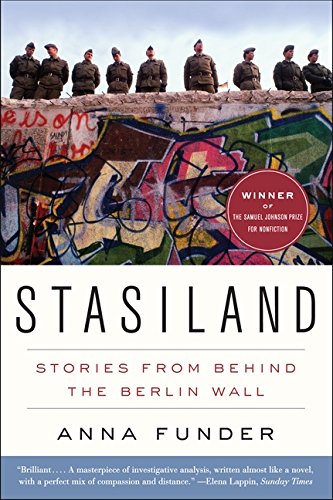
1. “Stasiland” by Anna Funder  (published in 2003)
learn german words
This book is about the East Germans who resisted the GDR, the people who worked for the Stasi (the GDR’s secret police) and how those two groups coexist in German society now.  Funder’s book largely condemns the GDR and its system for its surveillance state, its murders and its torture, a viewpoint shared by many Germans today. Read more about “Stasiland” in The Guardian.

2. “Born in the GDR: Living in the Shadow of the Wall” by Hester Vaizey
(Oxford University Press in January 2015)
learn german words
The book tells a slightly different story than “Stasiland.” Vaizey interviewed 8 former East Germans about their experiences during Germany’s division and reunification. In the process of doing so, she met people spanning the gamut of opinions about the GDR, including people who had been imprisoned by the Stasi, people who felt resentful that West Germany had absorbed East Germany with no regard for the latter’s traditions, along with commentary on how their lives had changed after the fall of the wall.  Vaizey’s book will give you a glimpse into the range of East German experiences.

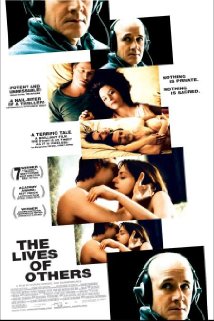
3. The movie “The Lives of Others”  (Das Leben der Anderen: 2006 German film and Best Foreign Language Film Academy Award winner)
learn german words
The movie tells the story of Stasi agents spying on a playwright in the 1980s, and the ruinous fall-out that comes from intense state scrutiny of private lives.

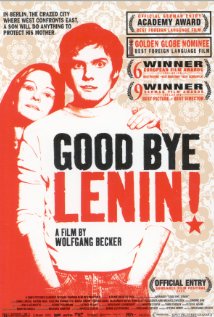
4. The movie “Goodbye Lenin” ( much lighter award-winning film from 2003)
learn german words
This film takes a much lighter approach to the GDR than “The Lives of Others.” Here, a devoted socialist woman falls into a coma before the Berlin Wall falls and wakes up after. Her son, fearing for her health, goes to great lengths to sustain the illusion that the GDR still exists and the wall is still standing.

Now finally: Yes, it was a complicated time in German history, and many people have complicated memories of it. But learn these ten words and you’ll be well on your way to a basic understanding of this period in German history.

10 German Words to Help You Understand Modern German History

1. Die Wende

Definition: the change, the turning point

Historical significance: Die Wende is the name for the significant changes that rocked the GDR after the Berlin Wall fell in 1989, leading up to reunification in late 1990. Suddenly, East Germans could travel to the west. The GDR moved towards a market economy, held a free election and eventually reunited with West Germany on Oct. 3, 1990.

Read more about die Wende here.

2. Die Grenze

Definition: the border, the boundary

Historical significance: Die Grenze signifies the border (called the Inner German Border) that ran between the GDR and the Federal Republic of Germany from 1949 to 1990, a 863-mile boundary extending from the Baltic Sea to Czechoslovakia. The heavily-guarded boundary, built to prevent GDR citizens from escaping into West Germany, separated two countries and two ways of life.

3. Der Ampelmann

Definition: related to die Ampel, which means traffic light

Historical significance: If you visit Berlin, you’ll see ordinary walking signals in some parts of the city and distinctive walking men in little hats in other parts. These are the Ampelmann, the GDR-designed walking signal premiered in 1961. When Germany reunified, engineers started replacing the Ampelmann with western traffic signals. But Ampelmann enthusiasts who wanted to preserve some relics of GDR life protested, and now the Ampelmann lives on, on certain streets in Berlin and throughout Germany.
Learn more about the Ampelmann here.

4. Der Trabant

Definition: satellite

Historical significance: The Trabant was the iconic car of East Germany (see photo top) , a small two-stroke engine vehicle produced by a Saxon auto-maker that many families saved up for decades to reserve and buy. Once purchased, it was typical to disassemble it before using it, to become self-sufficient, should any parts need replacing. Waiting for repair service could take additional years.  After the wall fell, families streamed out of East Germany in their Trabants. You can spot these distinctive little cars around Berlin today—some of them are still in use (rent one by the hour, for fun), while others are used for decoration at cafes and tourist sites. Check out the Trabant museum in Berlin.

5. Ostalgie

Definition: a combination of the German word for East (Ost) and the word Nostalgie, which means nostalgia.

Historical significance: The concept of Ostalgie is used to describe nostalgia for East Germany, something experienced by many residents of the eastern half of the country after reunification. Ostalgie can be used to describe nostalgia for the East German aesthetic (Trabants and the Ampelmann, for example) as well as a deeper nostalgia for a time before the upheaval of reunification. In 1989, the unemployment rate in East Germany was 0 percent; in 1992 the figure clocked in at 15 percent. In 2013 the figure stood at 9.5 percent, versus 5.8 percent in West Germany. It’s easy to see why some East Germans miss the positive aspects of their former country.

6. Ossi

Definition: a nickname, often derogatory, for Germans from the former east (derived again from the word Ost - East)

Historical significance:  26 years after the fall of the Berlin Wall, the stereotype (das Vorurteil) that accompanies Ossis is that they are whining and ungrateful for the help given them by West Germany (which paid plenty of money for reunification, forfeiting upgrades to their own infrastructure, for instance in schools) as well as racist and uneducated, as evidenced by the PEGIDA demonstrations in fall 2014. They have accepted far fewer Syrian refugees, for instance, yet are the loudest in making claims against them.

7. Wessi

Definition: a nickname, often derogatory, for Germans from the former west

Historical significance: Just as Westerners have Vorurteile for the East, so do Easterners have Vorurteile for the West. The stereotype goes that Wessis are know-it-alls, quick to criticize and have a superiority complex.

8. Die Mauer

Definition: the wall  (exterior; not to be confused with die Wand, an interior wall)

Historical significance: The Berlin Wall was constructed in August 1961 to cut off West Berlin from East Berlin and the rest of East Germany by encircling West Berlin with a physical barrier. Officially referred to as the “Anti-Fascist Protective Rampart” in the GDR, the wall was largely dismantled in the 1990s, although sections of it remain in Berlin today, notably the East Side Gallery, a section of the wall that runs between Friedrichshain and Kreuzberg and is decorated with artists’ murals in the 1990s, plus a few chunks at Bornholmer Straße, where border guards first opened the wall in 1989.

Learn more about the Berlin Wall here.

9. fliehen

Definition: verb:  to flee

Historical significance: After the Berlin Wall was built, approximately 5,000 people attempted to flee from the GDR by crossing the wall into West Berlin. These people were trying to fliehen von the GDR and make better lives for themselves in the west—a trend that led to up to 200 deaths in the border area during the wall years. Other East Germans tried to flee to other countries through methods such as trying to swim to Hungary.

10. Die Wiedervereinigung

Definition: the reunification

Historical significance: The Deutsche Wiedervereinigung refers to the process through which East and West Germany reunified into one country—a process that culminated on October 3, 1990, officially celebrated as the Day of German Unity.

Despite the official reunification, 25 years later, it can't be denied that there are still more than just a handful of Germans who still have a “wall in the head(== interesting DeutscheWelle read)   when it comes to viewing themselves as a united country. 

Still, it's important to remember that modern Germany is much more than the burden of its past, and there are many exciting and innovative aspects to modern German culture that have nothing to do with walls.

Sunday, November 30, 2014

New Yorker Profiles Germany's Chancellor, Angela Merkel

THIS "PROFILE" IS LONG!   THERE ARE MANY GEMS THOUGH.  GOOD LUCK!

A summer afternoon at the Reichstag. Soft Berlin light filters down through the great glass dome, past tourists ascending the spiral ramp, and into the main hall of parliament. Half the members’ seats are empty. At the lectern, a short, slightly hunched figure in a fuchsia jacket, black slacks, and a helmet of no-color hair is reading a speech from a binder. Angela Merkel, the Chancellor of the Federal Republic of Germany and the world’s most powerful woman, is making every effort not to be interesting.

...... Paragraph 1 of many!  
Find out details of Angela's youth as an award - winning Russian speaker growing up in Brandenburg.  Learn what she thought of  rebellious West Germans in the '60's (The Baader Meinhof Gruppe) and of Americans.  Read about her initially cold relationship with Obama, which has warmed considerably -- even while he's grown far less popular.  Yes, there are clues to her private life.  There is discussion of Germany's history and politics (including fascinating details about the destruction and rebuilding of the amazing parliament building, the Reichstag).  We also learn how incredulous Germans initially were to hand their nation's government over to her.  And how she's quietly relishing the country's stability now, which has fueled her popularity, while her opponents find she's made of Teflon.
Might she run for a 4th term? Certainly her success cannot last.  -- Right?  
 

Friday, November 7, 2014

Interactive BEFORE / AFTER Photos of the Berlin Wall

While initially you can see half of each comparison-photo, it's easy and so cool to pull the middle arrows across to view the whole photo of those you're especially interested in.

HIER: DANKE, MORGENPOST!

Saturday, November 1, 2014

Saturday, September 27, 2014

JFK: Ich bin ein Berliner

Most of us thought that this issue had been resolved decades ago.  Somehow, it keeps cropping us as new, with no mention of past clarifications. Jürgen Eichhoff resolved it in 1993, for instance: 
German-American Language Myths: Ich bin ein Berliner ... and a Linguistic  Clarification” by Jürgen Eichhoff, Monatshefte 85: 71–80 (1993


Here we go again! --rsb

Legend has it that US president John F. Kennedy made a whopping grammatical gaffe with his iconic declaration "Ich bin ein Berliner" 50 years ago on Wednesday, essentially telling his audience -- and the world -- "I am a jam doughnut".

The historical lore was that JFK, in his first faltering words of German, was wrong to use the indefinite article "ein" and should have said "Ich bin Berliner" to declare his solidarity with the embattled Cold War city.

Not so, says Anatol Stefanowitsch, a Berlin professor of linguistics.  "The sentence 'Ich bin ein Berliner' is grammatically absolutely acceptable," he told AFP ahead of the commemorations for the stirring June 26, 1963 speech.

The phrase came up twice in the speech, delivered in Kennedy's broad Boston accent. It was his brainchild and translated into German for him by official interpreters -- JFK had written it out phonetically on notecards so he would be understood.  (Perhaps:   Eek bean eye-n bear -lean- er ! --?)


Stefanowitsch notes that while "Berliner" is a German word for a filled pastry, the context of Kennedy's declaration made his sentence abundantly clear to the cheering throngs.  "The confusion derives from the fact that (in German), you normally express your belonging to a predefined group in a sentence without an article, such as 'Ich bin Student' or indeed 'Ich bin Berliner'," he said.

"The sentence 'Ich bin Berliner' is clear and cannot refer to 'doughnuts' because that is not a predefined group," he explained.

Stefanowitsch said the construction with the article "ein" is used when a speaker wants to say that he doesn't literally belong to the group (Berliners in this case), but rather wants to express that he has something in common with them.  "That is exactly what Kennedy wanted to do -- he did not want to claim to actually be a resident of the city of Berlin but rather to say that he shared something with the Berliners, namely their love of freedom," Stefanowitsch said.

At the end of his 10-minute address, Kennedy uttered the immortal words: "All free men, wherever they may live, are citizens of Berlin and therefore, as a free man, I take pride in the words 'Ich bin ein Berliner'."

So there would have been no blank stares or giggles from the crowd of 450,000 Germans that summer's day?  "Kennedy not only delivered a grammatically correct sentence but rather the only sentence that made sense there," Stefanowitsch said.

Saturday, September 6, 2014

Leipzig 4. Sept 1989: Nikolaikirche!

This is the Daily News broadcast in WEST Germany from Channel 1, ARD, from 25 years ago. 

These peace demonstrations took place every Monday afternoon after a service which included a kind of free exchange of complaints in Leipzig's Nikolai-Church. 


During the scuffle, the protesters chanted:
"Stasi raus!"   (Away with the Staatssicherheit = secret police; reportedly 1 in every 6 citizens!)
"Mauer weg!"  (Down with the wall!)

Diese DDR Bürger wollten einfach Freiheit. (These East German citizens simply wanted freedom.)
Die Volkspolizei (in Uniform) und Stasi sind auch dabei...

After the gathering in the church, these 2 homemade banners were unfurled -- and held aloft for a mere 6-7 seconds; long enough for cameras to capture the sentiment, and then sent the broadcast around the world. 

"Für ein offenes Land mit freien Menschen" [For an open country of free citizens]
"Reise Freiheit statt Massenflucht"  [No limits to travel instead of mass exodus]  

Were the Volkspolizei or those serving in the Staatsicherheit less committed to the socialist government in Leipzig than elsewhere?  Why didn't they clamp down on these protests before they grew to be unmanageable? 

Western sources confirm that during the last 4 Mondays leading up to the 9th of November, the Montagsdemonstrationen, or Monday Demonstrations at the Nikolaikirche drew between 300,000 and 500,000 people.  With so many protesters willing to fight against travel limitations and other governmental limitations, such as study and career opportunities, control was lost. 


The follow-up story on the newsreel also focuses on the unrest in the DDR (East Germany).  

Hundreds of DDR citizens responded to an offer in Hungary to open its borders for a day.  Officials in Budapest were discussing arrangements, thus many of the refugees had been waiting for over 2 weeks.  Meanwhile, ever more DDR citizens walked away from their lives and joined the campers in hopes of emigrating to West Germany.

This from CAFÉ BABEL from September 14, 2009  By Ádám Terjék Translated by Judit Révész
The picture of the opening of the Hungarian-Austrian border in 1989 is living vividly in my memory: in the television news of 10 September 1989 a group of East German tourists exult and rejoice at the announcement of Gyula Horn, Hungarian foreign minister saying all DDR citizens staying in Hungary could leave to the “west” with their passport.  Surpassing all expectations this act of Hungary played a crucial role in the soon destruction of the Berlin Wall, the reunion of Germany and of Europe. 

As Helmut Kohl, former chancellor of West Germany summarised in a short sentence: It was the Hungarians drawing the first brick out of the wall.
24828.jpg
 
There is no doubt that it was a historic event for both the Germans and the Hungarians. It is also interesting to see that following the sudden weakening of the Soviet Union it was Poland and Hungary that tried to seek their way to independence at first. These two nations proved so many times in their history how much they love freedom and how many things they are ready to do for it.

... In the second half of the 80s a small group of people recognized that the days of communism are numbered, but for average Hungarian and for the outside world it didn’t seem obvious at all. Unfortunately today there are some, who attempt to make those daring acts unimportant, saying that the collapse of the communist regime had always been a matter of time; so taking the decision of the opening the frontier and making steps towards bringing the communist autocracy to an end didn’t need much courage. 

They are not right at all! It did need much courage. 

The fact that Hungarian government of that time managed to make itself independent from the omnipotent communist party and were brave and resolute enough to take the decision about opening borders the proves about much of courage. We shouldn’t forget that the soviet troops were still stationed in Hungary at that time, and it was a real possibility that the Soviet Union intervenes again even by force, like it did in 1956 "our first revolution, which at the time, the Soviets tried to label as a counter-revolution.  We now know that was only desperate propaganda."

Finally we may put the question to ourselves: who deserves the glory? As Miklós Németh, former prime minister said: letting the East German to cross the frontier was a joint, collective achievement of the people of Hungary.


Tuesday, October 22, 2013

Wir sind wir, von Paul Van Dyk und Peter Heppner


"Die Deutschen haben sehr vieles erreicht worauf sie stolz sein können, sie haben grosse Fehler begangen und mussten dafür leiden, dennoch haben sie sich von diesen dunklen Kapiteln nicht unterkriegen lassen und sind als einheitliches Volk wieder aufgeblüht."  YOUTUBE Kommentar v. ACAVYOS 2 months ago

Songtext
Wir sind wir

Tag um Tag, Jahr um Jahr,
Wenn ich durch diese Straßen geh', 
Seh' ich, wie die Ruinen dieser Stadt
Wieder zu Häusern auferstehen.

Doch bleiben viele Fenster leer,
Für viele gab es keine Wiederkehr.        (return)
Und über das, was grad noch war,
Spricht man heute lieber gar nicht mehr.

Doch ich frag', ich frag' mich, wer wir sind.
Wir sind wir. Wir stehen hier.
Aufgeteilt, besiegt und doch,
Schließlich leben wir ja noch.
Wir sind wir. Wir stehen hier.
Das kann's doch nicht gewesen sein.

Keine Zeit zum Traurigsein.
Wir sind wir. Wir stehen hier.
Wir sind wir.
Auferstanden aus Ruinen dachten wir,
Wir hätten einen Traum vollbracht.
40 Jahre zogen wir an einem Strang,
aus Asche haben wir Gold gemacht.

Jetzt ist mal wieder alles anders,
Und was vorher war, ist heute nichts mehr wert.
Jetzt können wir haben, was wir wollen,
Aber wollten wir nicht eigentlich viel mehr?
Und ich frag', ich frag' mich, wo wir stehen.
Wir sind wir. Wir stehen hier.
Wieder Eins in einem Land,
Superreich und abgebrannt.

Wir sind wir. Wir stehen hier.
So schnell kriegt man uns nicht klein,
Keine Zeit zum Bittersein.
Wir sind wir. Wir stehen hier.
Wir sind wir.

Wir sind wir.
Aufgeteilt, besiegt und doch,
Schließlich gibt es uns ja immer noch.

Wir sind wir.
Und wir werden‘s überstehen,
Denn das Leben muss ja weitergehen.

Wir sind wir.
Das ist doch nur ein schlechter Lauf.
So schnell geben wir doch jetzt nicht auf.


[Hier von Ro'N:  Diese Lied finde ich stark. Es ist intensive.]