While it’s true that the 12 years of the Third Reich still play a large role in German cultural memory and identity,
more recent historical events loom much larger in the collective conscious
of today’s Germany: the years between 1945 and 1990, when the country
was split into East Germany
(the German Democratic Republic- GDR in English / DDR auf Deutsch) and West
Germany (the Federal Republic of Germany- FRG = English / BRD auf Deutsch). As a tourist, a long-term visitor or a resident in Germany, you’ll see that the division
between East and West Germany still affects the country today, in areas
including the economy, political attitudes, racism and more. You’ll also
see the physical effects of this division,
especially in Berlin, which was divided into two cities (one controlled by the FRG and one controlled by the GDR), from 1961 until 1989.
Sound
overwhelming? There’s half a century of backstory to learn here, but it’s definitely doable.
By learning these 10 vocab words
related to the country’s division and eventual reunion, you’ll be
well on your way to understanding this crucial time period for Deutschland.
Why Learn about German History from 1945 to the Present?
1. Most Germans alive today lived through this time.
Many people who were adults during the Third Reich and
World War II have now died of old age.
But everyone you meet over the
age of 25 in Germany was alive during the country’s division.
Understanding the history of the divided country will go a long way
towards helping you
understand the German people’s psychology, prejudices and attitudes.
2. The division of Germany still has a huge effect on the country today.
Last fall, Germany made international headlines when PEGIDA, a
Dresden-based far-right, anti-Islam organization, marched in cities
around the country. Germans who disagreed with PEGIDA grumbled that of
course a far-right, anti-Islam movement would come out of Dresden. After
all, the city was located in one of two
Tal der Ahnungslosen,
or
Valley of the Clueless [Tal = valley; Ahnung = clue], during the Cold War. Dresden’s section of
southeast Germany and another part of northeast Germany
could not
receive television broadcasts from the west—hence the stereotype that
these regions are ill-informed to this day.
This Dresdener stereotype is just
one way that Germany’s division
still has bearing on the country today. You’ll find evidence of this
division in large-scale matters such as the economic discrepancy between
east and west, and small-scale matters such as brand loyalty to Nutella
versus brand loyalty to
Nudossi, the East German version of Nutella.
3. As a tourist, you’ll see remnants of this division
If you visit Berlin, you’ll see pieces of the Berlin Wall still
standing and covered with graffiti,
Trabants (cars) zooming through the
streets, murals depicting scenes from 1961 and 1989,
Stolpersteine (stumbling stones) embedded into the cobblestone to commemorate those who "disappeared," and even different
traffic signals (Ampelmännchen) in East Berlin and West Berlin. Understanding what all
of this means will greatly enhance your experience as a tourist in
Berlin and Germany.
Where Can You Learn More About This Time Period?
I can't resist adding these cultural gems:
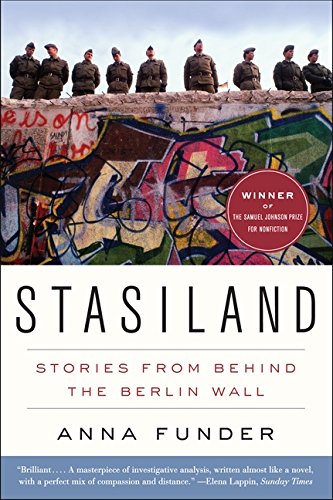
1. “Stasiland” by Anna Funder (published in 2003)
This book is about the East Germans who resisted the GDR, the people who worked for the
Stasi
(the GDR’s secret police)
and how those two groups coexist in German
society now. Funder’s book largely condemns the GDR and its system for
its surveillance state, its murders and its torture, a viewpoint shared
by many Germans today. Read more about
“Stasiland” in
The Guardian.
2. “Born in the GDR: Living in the Shadow of the Wall” by Hester Vaizey (Oxford University
Press in January 2015)
The book tells a slightly
different story than
“Stasiland.” Vaizey interviewed 8 former East Germans about their experiences during Germany’s division and reunification. In the process of doing so, she met people spanning the gamut of
opinions about the GDR, including people who had been imprisoned by the
Stasi,
people who felt resentful that West Germany had absorbed East Germany
with no regard for the latter’s traditions, along with commentary on how
their lives had changed after the fall of the wall.
Vaizey’s
book will give you a glimpse into the range of East German experiences.
3. The movie “The Lives of Others” (
Das Leben der Anderen: 2006 German film and
Best Foreign Language Film Academy Award winner)
The movie tells the story of
Stasi agents spying on a playwright in the 1980s, and the ruinous fall-out that comes from intense state scrutiny of private lives.
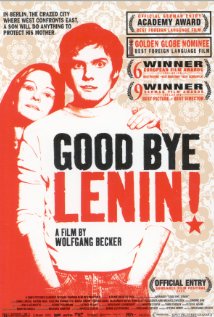
4. The movie “Goodbye Lenin” ( much lighter award-winning film from 2003)
This film takes a much lighter approach to
the GDR than “The Lives of Others.” Here, a devoted
socialist woman falls into a coma before the Berlin Wall falls and wakes
up after. Her son, fearing for her health, goes to great lengths to
sustain the illusion that the GDR still exists and the wall is still
standing.
Now finally: Yes, it was a complicated time in German history, and many people
have complicated memories of it. But learn these ten words and you’ll be
well on your way to a basic understanding of this period in German
history.
10 German Words to Help You Understand Modern German History
1. Die Wende
Definition: the change, the turning point
Historical significance: Die Wende is the
name for the significant changes that rocked the GDR after the Berlin
Wall fell in 1989, leading up to reunification in late 1990. Suddenly,
East Germans could travel to the west. The GDR moved towards a market
economy, held a free election and eventually reunited with West Germany
on Oct. 3, 1990.
Read more about
die Wende here.
2. Die Grenze
Definition: the border, the boundary
Historical significance: Die Grenze
signifies the border (called the Inner German Border) that ran between
the GDR and the Federal Republic of Germany from 1949 to 1990, a
863-mile boundary extending from the Baltic Sea to Czechoslovakia. The
heavily-guarded boundary, built to prevent GDR citizens from escaping
into West Germany, separated two countries and two ways of life.
3. Der Ampelmann
Definition: related to
die Ampel, which means traffic light
Historical significance: If you visit Berlin, you’ll
see ordinary walking signals in some parts of the city and distinctive
walking men in little hats in other parts. These are the
Ampelmann, the GDR-designed walking signal premiered in 1961. When Germany reunified, engineers started replacing the
Ampelmann with western traffic signals. But
Ampelmann enthusiasts who wanted to preserve some relics of GDR life protested, and now the
Ampelmann lives on, on certain streets in Berlin and throughout Germany.
Learn more about the
Ampelmann here.
4. Der Trabant
Definition: satellite
Historical significance: The Trabant was
the iconic
car of East Germany (see photo top) , a small
two-stroke engine vehicle produced by a
Saxon auto-maker that many families
saved up for decades to reserve and buy. Once purchased, it was typical to disassemble it before using it, to become self-sufficient, should any parts need replacing. Waiting for repair service could take additional years. After
the wall fell, families streamed out of East Germany in their Trabants.
You can spot these distinctive little cars around Berlin today—some of
them are still in use (rent one by the hour, for fun), while others are used for
decoration at cafes and
tourist sites. Check out the
Trabant museum in Berlin.
5. Ostalgie
Definition: a combination of the German word for
East (
Ost) and the word
Nostalgie, which means
nostalgia.
Historical significance: The concept of
Ostalgie
is used to describe nostalgia for East Germany, something experienced
by many residents of the eastern half of the country after
reunification.
Ostalgie can be used to describe nostalgia for the East German aesthetic (Trabants and the
Ampelmann,
for example) as well as a deeper nostalgia for a time before the
upheaval of reunification. In 1989, the unemployment rate in East
Germany was 0 percent; in 1992 the figure clocked in at 15 percent. In
2013 the figure stood at 9.5 percent, versus 5.8 percent in West
Germany. It’s easy to see why some East Germans miss the positive
aspects of their former country.
6. Ossi
Definition: a nickname, often derogatory, for Germans from the former east
(derived again from the word Ost - East)
Historical significance: 26 years after the fall of the Berlin Wall, the stereotype (
das Vorurteil)
that accompanies Ossis is that they are whining and ungrateful for the help given them by
West Germany
(which paid plenty of money for reunification, forfeiting upgrades to their own infrastructure, for instance in schools) as well as
racist and uneducated, as evidenced by the PEGIDA demonstrations in fall
2014. They have accepted far fewer Syrian refugees, for instance, yet are the loudest in making claims against them.
7. Wessi
Definition: a nickname, often derogatory, for Germans from the former west
Historical significance: Just as Westerners have
Vorurteile for the East, so do Easterners have
Vorurteile for the West. The stereotype goes that
Wessis are know-it-alls, quick to criticize and have a superiority complex.
8. Die Mauer
Definition: the wall (exterior;
not to be confused with die Wand, an interior wall)
Historical significance: The Berlin Wall was
constructed in August 1961 to cut off West Berlin from East Berlin and
the rest of East Germany by encircling West Berlin with a physical
barrier. Officially referred to as the “Anti-Fascist Protective Rampart”
in the GDR, the wall was largely dismantled in the 1990s, although
sections of it remain in Berlin today, notably the East Side Gallery, a
section of the wall that runs between Friedrichshain and Kreuzberg and
is decorated with artists’ murals in the 1990s, plus a few chunks at
Bornholmer Straße, where border guards first opened the wall in 1989.
Learn more about the Berlin Wall
here.
9. fliehen
Definition: verb: to flee
Historical significance: After the Berlin Wall was
built, approximately 5,000 people attempted to flee from the GDR by
crossing the wall into West Berlin. These people were trying to
fliehen von
the GDR and make better lives for themselves in the west—
a trend that
led to up to 200 deaths in the border area during the wall years. Other
East Germans tried to flee to other countries through methods such as
trying to swim to Hungary.
10. Die Wiedervereinigung
Definition: the reunification
Historical significance: The
Deutsche Wiedervereinigung
refers to the process through which East and West Germany reunified
into one country—a process that culminated on
October 3, 1990,
officially celebrated as the Day of German Unity.
Despite the official reunification, 25 years later, it can't be denied that there are still more than just a handful of Germans who still have a “
wall in the head”
(== interesting DeutscheWelle read) when it comes to viewing themselves as a united country.
Still, it's important to remember that modern Germany is much more than
the burden of its past, and there are
many exciting and innovative
aspects to modern German culture that have nothing to do with walls.