Saturday, August 13, 2016

More Cool Vocab: Compound Words!

20 weird german words
Thanks to its lifelong love affair with compound nouns, the German language has smashed all manner of words together to form new, unique vocabulary. It’s no small wonder that German boasts many unique, highly-specific words that have no literal English translation. Learning these words is like getting a special prize: for being able to express yourself in ways your own language has no equivalent - unless you use a whole sentence! [Other language user can get word-envy when comparing their language to German.]
Many of these descriptive German compounds have found their way into the English language, like Kindergarten, Schadenfreude and Wanderlust. But as you'll see, there are many more beyond those. Here are 18 more.  Pay attention, and you'll see how easy is can be to form these compounds. If you get the hang of this way of communication, it won't be long before you'll find yourself creating more German compound words on your own. 
Download: This blog post is available as a convenient and portable PDF that you can take anywhere. Click here to get a copy. (Download)

18 Weird German Words You Won’t Believe Exist

1. Ohrwurm (Ear worm)  
Have you ever listened to a song on the radio while driving to work only to find yourself still humming the same tune by lunch time? Congratulations, you’ve had an ear worm. The beautiful German word Ohrwurm describes the fact of having a song stuck in your head as if it wriggled itself into your brain through your ear.  (Dein Ohrwurm  is also the title of a WiseGuys song - an NKHS Deutschklub Favorite:  
https://www.youtube.com/watch?v=F9CtlJwh9b4 )

2. Fernweh (Distance pain; a longing for something in the distance; die Ferne = the distance; das Weh = woe)

This gem describes the feeling of wanting to be somewhere else. It’s kind of like a reverse homesickness (Heimweh in German), a longing for a place that isn’t where you are right now. Fernweh is also a frequent reason for people in Germany to go on holiday.

18 weird german words exist

3. Kummerspeck (Grief bacon; der Kummer = grief, heartache; der Speck = bacon)

When a relationship ends or during other times of sadness, anger, or worry, it’s common to put on a few pounds of Kummerspeck. What it means is the excess weight put on by emotional overeating. So when you find yourself on the couch watching “Bridget Jones’ Diary” with a tub of ice cream, you are in fact feeding your grief bacon.  

18 weird german words exist

4. Innerer Schweinehund (Inner pig hound)

Can’t get up in the morning to be on time for work? Too lazy to go to the gym? Homework remains undone until the last minute? Don’t worry, it’s not your fault. The blame lies with your inner pig hound. That’s the tiny voice in the back of your head which is trying to convince you to live a life of inertia and which you will have to overcome to rid yourself of Kummerspeck.

5. Fremdschämen (Exterior shame; fremd = foreign; strange;  sich schämen - to feel ashamed of ...)

For those of you who cringe in phantom pain when others make a fool of themselves, this is your word. It describes the feeling of shame when seeing someone else in an uncomfortable or embarrassing situation. It’s a real thing for the more empathetic folk and has kept more than one person from watching “the Office.” 

6. Torschlusspanik (Closing-gate panic)

As people get older, some find themselves worrying about roads not taken or milestones they meant to achieve by a certain age but haven’t. Torschlusspanik is the feeling of urgency to accomplish them before some imaginary gate closes and “it’s all too late.” It’s mostly used for those who sense their biological clock is running out and feel the need to settle with a partner or have children immediately.

7. Treppenwitz (Staircase joke)

Have you ever noticed how when you have a chance encounter with an attractive person of the opposite sex or get into an argument with someone, the best jokes, lines, and comebacks always occur to you afterwards? That’s the so-called Treppenwitz. It’s the joke that comes to your mind on the way down the stairs after talking to your neighbor in the hallway two floors up.     18 weird german words exist

8. Lebensmüde (Life exhaustion)

This word literally means being tired of life and was used to describe the dramatic and soul-crushing emotional agony of young Romantic poets (see also Weltschmerz and Weichei). Nowadays lebensmüde is what you call your friends when they are attempting something especially stupid and possibly life threatening. Most people in fail videos on YouTube suffer from latent Lebensmüdigkeit - the noun form of this word.

9. Weltschmerz (World pain)

The world isn’t perfect. More often than not it fails to live up to what we wish it was. Weltschmerz describes the pain we feel at this discrepancy. It can be one of the main drivers for Kummerspeck.
10. Weichei (Soft egg; das Ei = egg)
No, a Weichei isn’t what you order in the hotel when you want a three-minute egg for breakfast. In fact the waiter might look at you slightly disconcerted for accusing him of being a wuss. A soft egg, in German, means someone who is weak and cowardly. The same is also conveyed by calling someone Würstchen, the diminutive of sausage. Apparently Germans like to name wimps after foodstuffs.

In fact, the plural form might also come in handy: die Weicheier.  In fact, Hope Solo (the US Goalkeeper in Rio) might have used it when she described the Swedish soccer players who dethroned the US team, based on their non-aggressive, defensive game yesterday in the Quarter Finals. 

11. Backpfeifengesicht (Slap face; backen = to bake; also the backside of something; die Pfeife = pipe; die Backpfeife = hmmm. slap with the back of one's hand?! das Gesicht = face)

Have you ever heard the joke “Some people just need a high five – in the face – with a chair?” Backpfeifengesicht kind of goes in the same direction. It describes someone who you feel needs a slap in the face. 
Disclaimer: we’re telling you this for informational purposes only and do not in any way condone violence.  

18 weird german words exist

12. Erklärungsnot (Explanation need; die Not  [say : note] = need; trouble; even poverty)

Erklärungsnot is a state shared by cheating spouses, lying politicians, and school children without their homework alike. It’s what you find yourself in when put on the spot without a sufficient explanation or excuse for something you have done or failed to do. Most often used in the form of in Erklärungsnot geraten [raten=to guess; here, to be found out-- and therefore in urgent need to come up with a solid explanation] or in Erklärungsnot sein [sein=to be; here, to find yourself needing a solid explanation].

13. Sitzfleisch (Sit- or seat- meat; an abundance of meat on your "sit-upon")

As much as it sounds like it, Sitzfleisch isn’t a recipe of German Hausfrauen that involves tenderizing meat by placing it under your buttocks. Instead, it describes a character trait. Those who possess a lot of seat meat are able to sit through and weather something incredibly hard or boring. It’s like carrying your own personal cushion around with you.

18 weird german words exist

14. Purzelbaum (Tumble tree)

This tree is so common in Germany that every child knows it. However, if you are about to take out your big German botanical dictionary, let me stop you right there. Despite the name, a Purzelbaum isn’t part of the kingdom of plants. Instead, it describes a somersault on the ground, a favorite way of children to get their clothes dirty.
[Don't mix this up as I have with the Rad schlagen, or turning a cartwheel.  Duesseldorf is Germany's capital for Radschläger.   https://de.wikipedia.org/wiki/D%C3%BCsseldorfer_Radschl%C3%A4ger   There is even a door knocker in the shape of a child turning a cartwheel on the door of the St. Lambertus church there.  -rsb]

15. Dreikäsehoch (Three cheeses high)

This sounds like it would make a great name for a pizza. However, what it describes is a person who is vertically challenged, implying they’re only as tall as three wheels of cheese placed on top of each other. Usually this label is reserved for small children, together with Zwerg  [=dwarf]  or Pimpf  [=little rascal].

18 weird german words exist

16. Zungenbrecher (Tongue breaker)

While it sounds like a medieval torture instrument, the nature of the Zungenbrecher is much less gruesome. It is the German equivalent of tongue twister, a phrase that’s very hard to pronounce even for native speakers due to its sequence of letters. A very common one in German is Blaukraut bleibt Blaukraut und Brautkleid bleibt Brautkleid. Yeah, practice that for a while and say it 10 times fast.

17. Schattenparker (Shadow parker)

This word is part of a series of insults for men which accuse them of unmanly behavior. In this case, of parking their car in the shadow to avoid heating up the interior. These kinds of derogatory terms were something of a meme some years back and whole lists of them exist on the internet. Alternatives include Warmduscher (=someone who showers with warm water; die Dusche = shower)Sitzpinkler (a man who urinates while sitting down); or Turnbeutelvergesser (someone who used to forget their gym bag in cardio class; das Beutel = sack or pouch.  So, can you guess which animal the Beutelbär might be?).

18 weird german words exist

18. Kuddelmuddel (???)

I know, great final word right? Don’t even start guessing its English meaning. Kuddelmuddel describes an unstructured mess, chaos, or hodgepodge. Alternatives which are equally awesome include Tohuwabohu, WirrwarrMischmasch, and Kladderadatsch. I know, some of these just sound too far-fetched to be true. Well, they are far-fetched – gathered in the distant land of Germany. If you’re still convinced I’m making up words, go ahead and look them up in the dictionary!

Wednesday, August 10, 2016

Living in Switzerland ruined me for America and its lousy work culture

by Chantal Panozzo on February 1, 2016

I was halfway through a job interview in Chicago when I realized I was wrinkling my nose. I couldn't help myself. A full-time freelance position with a long commute, no benefits, and a quarter of my old pay was the best they could do? I couldn't hide how I felt about that, and the 25-year-old conducting the interview noticed.
"Are you interested in permanent jobs instead?" she asked.
"I could consider a permanent job if it was part-time," I said.
She looked at me like I was speaking a foreign language and went right back to her pitch: long commute, full-time, no benefits. No way, I thought. Who would want to do that? And then it hit me: Either I had become a completely privileged jerk or my own country was not as amazing as I had once thought it to be. This wasn't an unusually bad offer: It was just American Reality.

Now that I'm back, I'm angry that my own country isn't providing more for its people.

Before I moved to Switzerland for almost a decade, American Reality was all I knew. I was living in a two-bedroom apartment making $30,000 a year in a job where I worked almost seven days a week with no overtime pay and received 10 days of paid time off a year.

In other words, for the hours worked, I was making minimum wage, if that. The glamour of this job was supposed to make up for the hours, but in reality, working every weekend is a ticket to burnout — not success.

My husband and I were so accustomed to American Reality that when he was offered an opportunity to work in Switzerland, we both thought about travel and adventure — not about improving our quality of life. It hadn't occurred to us that we could improve our quality of life simply by moving.
But without realizing it, or even asking for it, a better life quality came to us. And this is why, now that I'm back, I'm angry that my own country isn't providing more for its people. I will never regret living abroad. It taught me to understand another culture. And it taught me to see my own. But it also taught me something else — to lose touch with the American version of reality.

Here are seven ways living abroad made it hard to return to American life.

1) I had work-life balance

The Swiss work hard, but they have a strong work-life balance. According to data from the Organisation for Economic Co-operation and Development, the average Swiss worker earned the equivalent of $91,574 a year in 2013, while the average American worker earned only $55,708. But the real story is that the average American had to work 219 hours more per year for this lesser salary.

Which brings us to lunch. In Switzerland, you don't arrive to a meeting late, but you also don't leave for your lunch break a second past noon. If it's summer, jumping into the lake to swim with the swans is an acceptable way to spend your lunch hour. If you eat a sandwich at your desk, people will scold you. I learned this the hard way.
"Ugh," said Tom, a Swiss art director I shared an office with at a Zurich ad agency. "It smells like someone ate their lunch in here." He threw open the windows and fanned the air.
"They did. I ate a sandwich here," I said.
Tom looked at me like I was crazy.
"No. Tomorrow you're having a proper lunch. With me," he said.

The next day, exactly at noon, we rode the funicular to a restaurant where we dined al fresco above Zurich. After lunch, we strolled down the hill. I felt guilty for being gone for an hour and a half. But no one had missed us at the office.

Lunchtime is sacred time in Switzerland. When I was on maternity leave, my husband came home for lunch to help me care for our daughter. This strengthened our marriage. Many families still reunite during weekdays over the lunch hour.

Weekends in Switzerland encourage leisure time, too. On Sundays, you can't even shop — most stores are closed. You are semi-required to hike in the Alps with your family. It's just what you do.

The author and her daughter in Urnaesch, Switzerland, watching the cows come home. (Brian Opyd)

2) I had time and money


The Swiss have a culture of professional part-time work, and as a result, part-time jobs include every benefit of a full-time job, including vacation time and payment into two Swiss pension systems. Salaries for part-time work are set as a percentage of a professional full-time salary­ because unlike in the United States, part-time jobs are not viewed as necessarily unskilled jobs with their attendant lower pay.

During my Swiss career, I was employed by various companies from 25 percent to 100 percent. When I worked 60 percent, for example, I worked three days a week. A job that is 50 percent could mean the employee works five mornings a week or, as I once did, two and a half days a week. The freedom to choose the amount of work that was right for me at varying points of my life was wonderful and kept me engaged and happy.

When I took only 10 days for a trip to Spain, my colleagues chastised me for taking so little time off Often, jobs in Switzerland are advertised with the percentage of work that is expected. Other times, you can negotiate what percentage you would like to work or request to go from working five days a week to four days a week, for example. There is normally little risk involved in asking.
One married couple I knew each worked 80 percent, which meant they each spent one day a week at home with their child, limiting the child's time in day care to three days a week while continuing full professional lives for both of them. According to a recent article in the New York Times, "Why U.S. Women Are Leaving Jobs Behind," 81 percent of women in Switzerland are in the workforce, versus 69 percent in the US. I believe attitudes toward professional part-time work — for both men and women — have a lot to do with this.

3) I had the support of an amazing unemployment system


About three years into my Swiss life, I lost my job. And I discovered that in Switzerland, being on unemployment meant you received 70 to 80 percent of your prior salary for 18 months. The Swiss government also paid for me to take German classes, and when I wasn't looking for jobs, I could afford to write a book.
In the United States, on the other hand, unemployment benefits generally pay workers between 40 and 50 percent of their previous salary, and these benefits only last for six months on average. However, thanks to the American Recovery and Reinvestment Act in 2009, some unemployed people now receive up to 99 weeks of benefits.

4) I witnessed what happens when countries impose wealth-based taxes


Compared with taxes in the United States, Swiss taxes are easy on the average worker. For example, a worker earning the average wage of $91,574 would pay only about 5 percent of that in Swiss federal income tax. Instead of taxing salaries at high percentages — a practice that puts most of the tax burden on the middle class, where most income comes from wages and not from capital gains — Switzerland immediately taxes dividends at a maximum of 35 percent and also has a wealth-based tax.
While the American tax system is supposed to be progressive — so the more you earn, the more taxes you pay — up to 39.6 percent tax for the highest income brackets, the superrich escape paying these kind of taxes because they aren't making most of their money in wages.

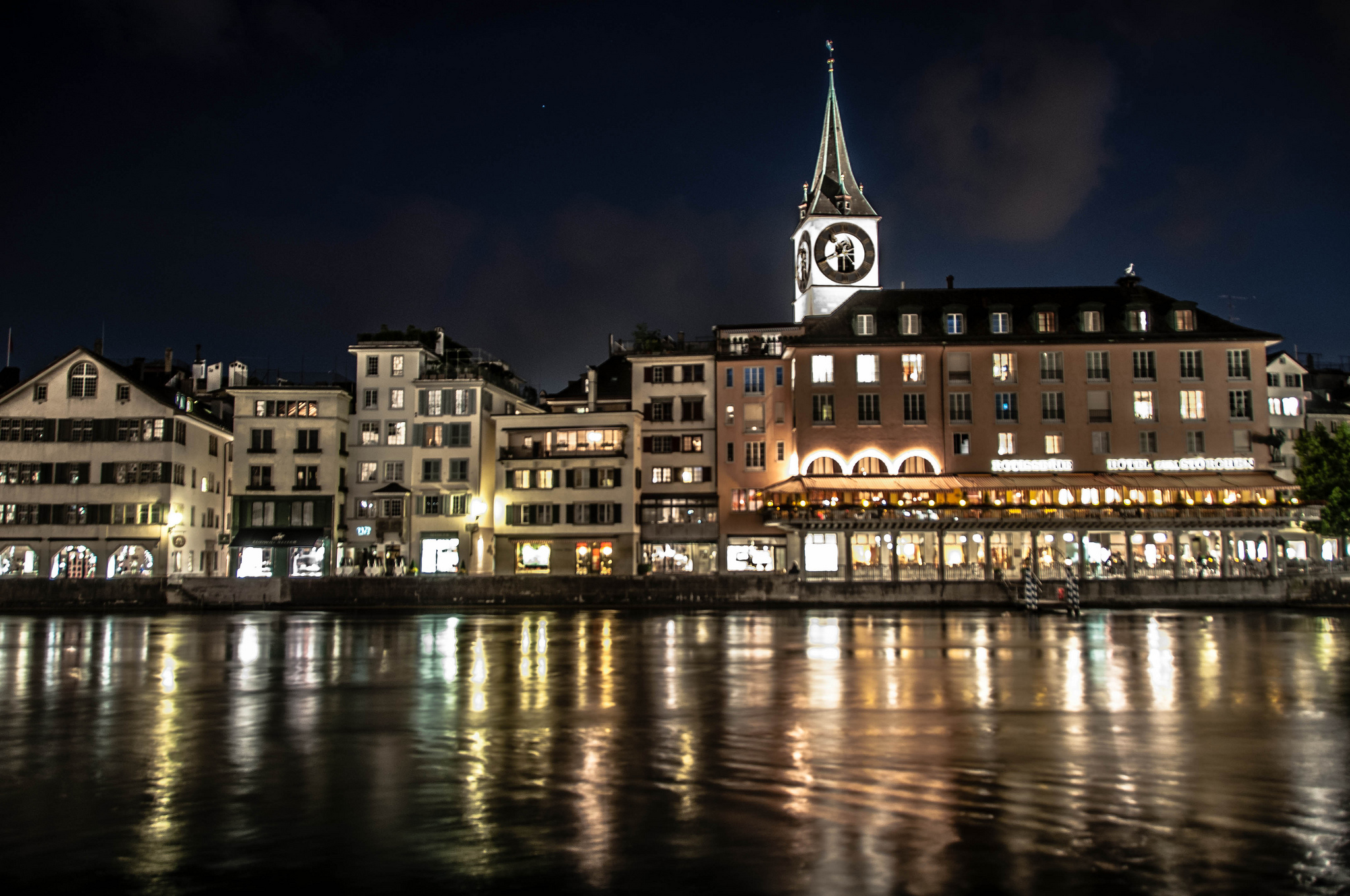
Zurich at night. Beautiful! (Kamil Porembiński)


For example, in 2010, Mitt Romney, whose total income was $21.6 million, paid only $3 million in taxes, or a tax rate of about 14 percent, which is amazing when you consider this is the same tax rate American families earning wages from about $16,750 to $68,000 paid in 2010.
The Swiss taxation method leaves money in the pocket of the average worker — and allows them to save accordingly. The average adult in Switzerland has a net worth worth of $513,000 according to the 2013 Credit Suisse Wealth Report. Average net worth among adults in the US is half that.
While I witnessed the benefits of the Swiss tax system for the average person, I did not benefit from them due to my American citizenship. Instead, I paid both Swiss tax and American tax while living in Switzerland. Unfortunately, the US is one of the only nations in the world where tax is citizen-based instead of resident-based. (China, in a new push to enforce tax law for citizens working abroad, is one of the others, along with Eritrea.)

5) I had lots of paid vacation time; was never made to feel guilty about taking it


At my former American job, I received 10 days of paid vacation per year, and each of those days came with a sizable portion of guilt if actually used. But in Switzerland, my husband's company gave employees six weeks of vacation a year. Most of the Swiss companies I worked for gave four — the legal minimum is four. Moreover, everything shut down between Christmas and New Year's, giving most employees like me another guaranteed week off.
 
People in Europe took vacation seriously. Once, when I only took 10 days for a trip to Spain, my colleagues chastised me for taking so little time off. I learned to take vacation chunks in two-week intervals. Well rested, I noticed that I felt more productive and creative when I returned to work. Recent American research confirms what I was feeling: Relaxing can make you more productive. So why don't Americans embrace vacation time?

6) I never had to own a car


I'm currently cringing at the idea of being required to buy a car. A Honda dealer here in Chicago recently quoted me $18,000 for a 2012 Accord, and that seems like a lot of money — especially when you still need to pay for insurance, gasoline, and repairs. The price is even more daunting for someone who isn't used to being required to pay for such a thing.

The freedom to choose the amount of work that was right for me kept me engaged and happy Not owning a car is financially freeing — and it saves the environment, too. In Switzerland, 21 percent of households do not own a car, versus 9.2 percent in the US.

The Swiss train connects to the bus that connects to the cable car to get you on the slopes in the middle of nowhere at the scheduled second. From Zurich, I could also take a high-speed train to Paris in three and a half hours. Now I can barely get from the western suburbs to the north side of Chicago in that amount of time — let alone have the option to do it carless. This means I'm turning down jobs instead of taking them. This isn't good for the American economy or for me.

And let's be clear: Living in a city suburb is no excuse for having bad transit options. I lived exactly the same distance from Zurich that I now live from Chicago (15 miles) but shared none of the public transport frustrations.

7) I had excellent health care when I gave birth — and then enjoyed a fully paid 14-week maternity leave


When I gave birth in Switzerland, I was encouraged to stay five days in the hospital. So I did. The $3,000 bill for the birth and hospital stay was paid in full by my Swiss insurance. As was the required midwife, who came to my apartment for five days after I came home from the hospital to check on both my health and my baby's.

Had I been in the US for my delivery, the cost would have been much higher — and the quality of care arguably lower. The average price for a vaginal birth in the US is $30,000 and includes an average of less than a two-day hospital stay.

Swiss law also mandates14-week maternity leave at a minimum of 80 percent pay. I was lucky enough to receive 100 percent pay.

Compare that with the US, where new mothers aren't guaranteed any paid time off after giving birth. In Switzerland, it's also common to choose how much work to return to after having a child. Since my Swiss job at the time had been full time, I chose to return at 60 percent.

Other American friends in Switzerland who gave birth also chose to return to their careers part time: My engineering manager friend chose 70 percent, and my lawyer friend chose 80 percent. We had great careers, we had balance, and we also had a Swiss government that paid a monthly child stipend whether we needed it or not. For Americans like me, Swiss Reality was privilege.

Finally, finally, after almost a decade abroad, my husband and I decided we needed to go home to see what home felt like -- or to see if the US even felt like home anymore. So we put our Swiss residence permits on hold for two years and went back to Chicago.

While I enjoy being close to family again, returning to the US made me realize who I've become:
  • Someone who can't believe companies aren't required to pay into a pension fund beyond Social Security. 
  • Someone who is offended that most women in America don't have the maternity benefits she had.
  • someone who is mad that she must own a car for lack of efficient public transportation. 
  • Someone who, because of all of this, is still debating where she ultimately wants to call home.

Chantal Panozzo is the author of Swiss Life: 30 Things I Wish I'd Known.

Monday, July 11, 2016

Blogs -- auf Deutsch!

Mit besten Dank, FluentU!
There’s a whole load of blogs out there. In fact, nowadays it’s probably quite hard to find someone who doesn’t have their own blog. With everyone writing about their hobbies and interests, blogs cover pretty much every subject there is. So no complaining that you can’t find one to suit your tastes!
Another bonus to this wealth of subject matter is that if you need to study a certain theme or topic for a German class you’re taking, you can easily find a German blog to quickly to dip into and take note of the necessary vocab.
Most blogs have sections for readers’ comments below each article. Wanna stretch your writing muscles? Get commenting! For practice in giving an opinion in German, which is often what’s asked of you in writing exams, the comments section is the place to be.

10 Attention-grabbing Blogs in German That’ll Keep You Reading 

1. Mit Vergnügen (My Pleasure)

blogs in german
Mit Vergnügen is a blog all about the latest goings-on in Berlin. If there’s a cool gallery opening or underground party coming up, the guys at Mit Vergnügen will know about it. Every day, they post about one fun thing happening—and this is actually where the name comes from: Mit Vergnügen is the German way of saying, “My pleasure” after being invited somewhere. The posts aren’t too long, so they’re great for a quick read every now and then. As the writers are all young, this blog will also give you a great insight into informal German and slang.

2. We Travel the World

blogs in german
We Travel The World is a fantastic German-language travel blog. The website is split up into country and area sections. Pick the one that interests you most, and discover local food and culture! You’ll also find helpful posts about planning a trip—budget, what to pack, checklists, etc. One fantastic aspect of this blog is that despite its international scope, it also has posts about Germany—so you can travel the country without even leaving your sofa! If you are planning on jetting off on vacation, you can brush up on that all-important travel vocab before setting out.

3. Fashion Insider

blogs in german
Here’s one for all you fashionistas out there. Fashion Insider is a fantastic fashion blog full of loads of ideas on what latest trends should be in your closet. If you ever find yourself in Germany after reading this blog, you’ll know all the right vocab to help you get your shop on. It’s a great blog to pick up on everyday words. There’s also a section on home wear, which should help to widen your vocabulary even more.

4. ScienceBlogs

blogs in german
If you want to practice a bit of advanced German, head on over to ScienceBlogs. The name is a little deceptive—even though the bulk of the articles are about the science world, there’s also quite a few political and cultural blog posts to delve into. The writing is slightly more formal than the rest of the blogs on this list, but there’s nothing too tricky in there—just think of it as great practice!

5. Karrierebibel (Career Bible)

blogs in german
Karrierebibel is a blog all about the professional world. Whether you want tips on how to ace an interview or how to organize yourself more efficiently, this blog will load you up with all the useful tips and tricks for the workplace you can imagine. So why read this in German? Well, besides the reasons we’ve already covered, it will help you to better your business German. Like ScienceBlogs, it’s also written a little more formally and is great for getting to grips with some professional German.

6. Für Sie (For You)

blogs in german
Für Sie is a blog by the German magazine of the same name. It’s packed full of yummy recipes and definitely a blog that all foodies should add to their bookmarks. One interesting learning feature of all the recipes is that they are written in the imperative—the tense that is used for commands and instructions.
Like so:
Öl in einer Pfanne erhitzen. (Heat the oil in a pan.)

7. Schokohimmel (Chocolate Heaven)

blogs in german
Here’s another food blog, but this time it’s one for all of you with a sweet tooth! This blog is aimed at bakers and has a wide selection of traditional German, Austrian and Swiss cakes, biscuits and pastries. As with Für Sie, this one will boost your knowledge of the imperative. When Schokohimmel‘s blogger, Judith Weitzel, goes on her travels around Germany, she often writes about them. So along with tasty treats, this blog is jam-packed with a native’s view of her own country!

8. Deutschwortschatz (German Lexicon)

blogs in german
Deutschwortschatz is a blog all about words. Some of the quirky posts include poetry, origins of words and lists of words that belong to a theme (just like this one of unusual illness names). Obviously, this blog is a great place to go to build up your German vocabulary. And if you learn the history and origins of words, you never know, it just might help them to stick in your mind.

9. Literatur Blog (Literature Blog)

blogs in german
Another blog that focuses on words, Literatur Blogprefers those words to be working together to make up a good book. This blog is a collection of book reviews and short biographies of featured authors. Have you run out of ideas for choosing your next German book? Well, look no further—there’s a lot of solid recommendations to be found on Literatur Blog.

10. Testspiel (Tryout)

blogs in german
I couldn’t very well write a list of blogs and not mention a single music blog, could I? Music blogs are, after all, ubiquitous in every country’s blogosphere. Testspiel is one of the most popular in German-speaking countries. You’ll find a ton of music reviews on the website, helping you to keep up-to-date with who’s hot in the German charts. Even if you’re not a massive music fan, it’s still worth checking out this blog—they also post TV and film reviews as well as articles on current art and design trends.
From how to bake Bavarian sweet treats, to learning the dos-and-don’ts of the German workplace, there’s almost nothing a blog can’t help you out with. And they’ll help you with your German along the way.
Who knows? You might even feel compelled to start your very own German-language blog!

Kleine große Stimme: Great Little Voice

Trailer -- an orphan seeks his father using an English song he learned from his mother before she died.  He assumes the song was taught to her by his father, an American soldier, who left without knowing he had a son.  
The boy's strategy is to audition for the Boy's Choir in Vienna, since it regularly tours in the USA.
Era:  1955     Filmed in 2015.


How - and when - does one become a Wiener Chor Knabe?
And what is life like for these Choristers?


1. Episode: Mein Weg nach Deutschland

In der ersten Episode lernen wir eine Türkin, namens Nevin lernen, die jetzt in Deutschland wohnt.  Sie muss viel über das Leben in Deutschland lernen.  Hier lernt sie über öffentliche Verkehrsmittel: sie fährt mit dem Bus zum Arbeitsamt.

Nevin, a Turkish woman, is featured in this first episode.  She now lives in Germany, and must learn a lot about life in Germany.  In this episode, she learns to use public transportation:  she takes the bus to the Employment Office.


Do you feel Nevin has learned German fairly well by now?
Does she have reason to be intimidated by living among Germans?
Does Nevin seem to enjoy being in Germany?  (How does she pass the time on her bus ride?)
Must Nevin rely on others for help? 

Check out the other episodes which follow. 
Do you have a favorite?